Alex Petrov's Teaching Page
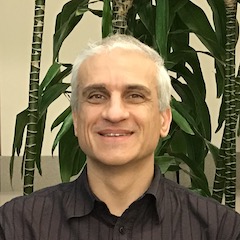
Dr. Alexander A. Petrov
Associate Professor
Visual Cognition Lab
Department of Psychology
Courtesy affiliation with the
Department of Philosophy
Ohio State University
200B Lazenby Hall
1827 Neil Avenue
Columbus, OH 43210
Email: apetrov [at] alexpetrov [you know what]
WWW:
https://alexpetrov.com/
To Prospective Graduate Students
Dear Colleague,
We live in such exciting times! The most interesting thing in the Universe -- the human brain -- is beginning to reveal its secrets. We know a great deal about the brain and a great deal about behavior. The time has come to forge a unified understanding about how the former gives rise to the latter. Cognitive science today is at a threshold analogous to where biology was shortly after the discovery of the DNA 50 years ago. The next 50 years will witness similar breakthroughs in cognitive neuroscience. I was introduced to this field many years ago (Thank you, Boicho!) and never looked back. Who knows, you might find it just as exciting. There is plenty of unsolved problems for all of us.
If you want to take part in this adventure and you are prepared to work hard to get to the cutting edge, then you will thrive in our lab. Welcome!!
The lab is recruiting new applicants for the 2026/2027 academic year. There is a modeling track and an experimental track. To get a sense of recent work in the modeling track, check my publications at ICML2020 and CogSci2019. To get a sense of recent work in the experimental track, check my publication at CogSci2024. Interdisciplinary research that combines modeling and behavioral experimentation is possible and strongly encouraged! See the Visual Cognition Lab website for details.
"Let no one ignorant of geometry come under my roof." According to tradition, this warning was engraved above the entrance of Plato's Academy in Athens. An analogous admonition applies to our lab. The research that we do requires considerable mathematical sophistication by the standards of psychology. To do well, a student is expected to have taken a calculus course, a linear-algebra course, and a statistics course at the undergraduate university level. Those who have already taken such courses are off to a good start. The others will be asked to boost their mathematical education during their first year of graduate study. Knowledge of a programming language such as R or Python is also a big plus. Students with undergraduate majors in the hard sciences (e.g., physics, computer science) or philosophy are strongly encouraged to apply. Although it is not mandated by the Department, the applicants to our lab are strongly encouraged to take the GRE test. The academic transcript of a successful applicant typically includes a portfolio of math and programming courses. The more such courses, the better!
Current Courses
I enjoy teaching and I consider the opportunity to interact with young, bright, and open-minded people among the major attractions of my academic career. I have come to realize, after some trial and error, that learning and not teaching is the critical activity in the classroom. What is important is what students do; what professors do only matters to the extent it influences students' behaviors and learning practices. Accordingly, I consciously try to promote active discussion in the classroom in addition to lecturing. I also try to motivate the students to invest the hours necessary to master the material after class by providing plenty of home assignments, midterm exams, and regular feedback.
In the Fall semester of 2025, I teach the following course. I will teach it again in Spring 2026 and Fall 2026.
In the Spring semester of 2027, I will teach two sections of the following course:
Past Courses
At one time or another, I have taught the following courses (in no particular order):
- PSYCH 3312: Memory and Cognition (course syllabus)
- PSYCH 5612: Introduction to Cognitive Science (course syllabus)
- PSYCH 5618: Introduction to Computational Cognitive Neuroscience (course announcement)
- Cognitive Science in the Age of Artificial General Intelligence (New Bulgarian University, SS2024) (lecture videos)
-
PSYCH 811: Analogy and Relational Reasoning: Data and Models
(course syllabus)
(Listed under generic title: Seminar in Experimental Psychology.) - Computational Cognitive Neuroscience I (aka Human Learning II: Memory) (course syllabus)
- Computational Cognitive Neuroscience (New Bulgarian University, SS2007) (course syllabus)
- Human attention (UC Irvine, 2004) (course syllabus)
- Principles of learning in humans and machines (New Bulgarian University, SS2000) (course syllabus)

